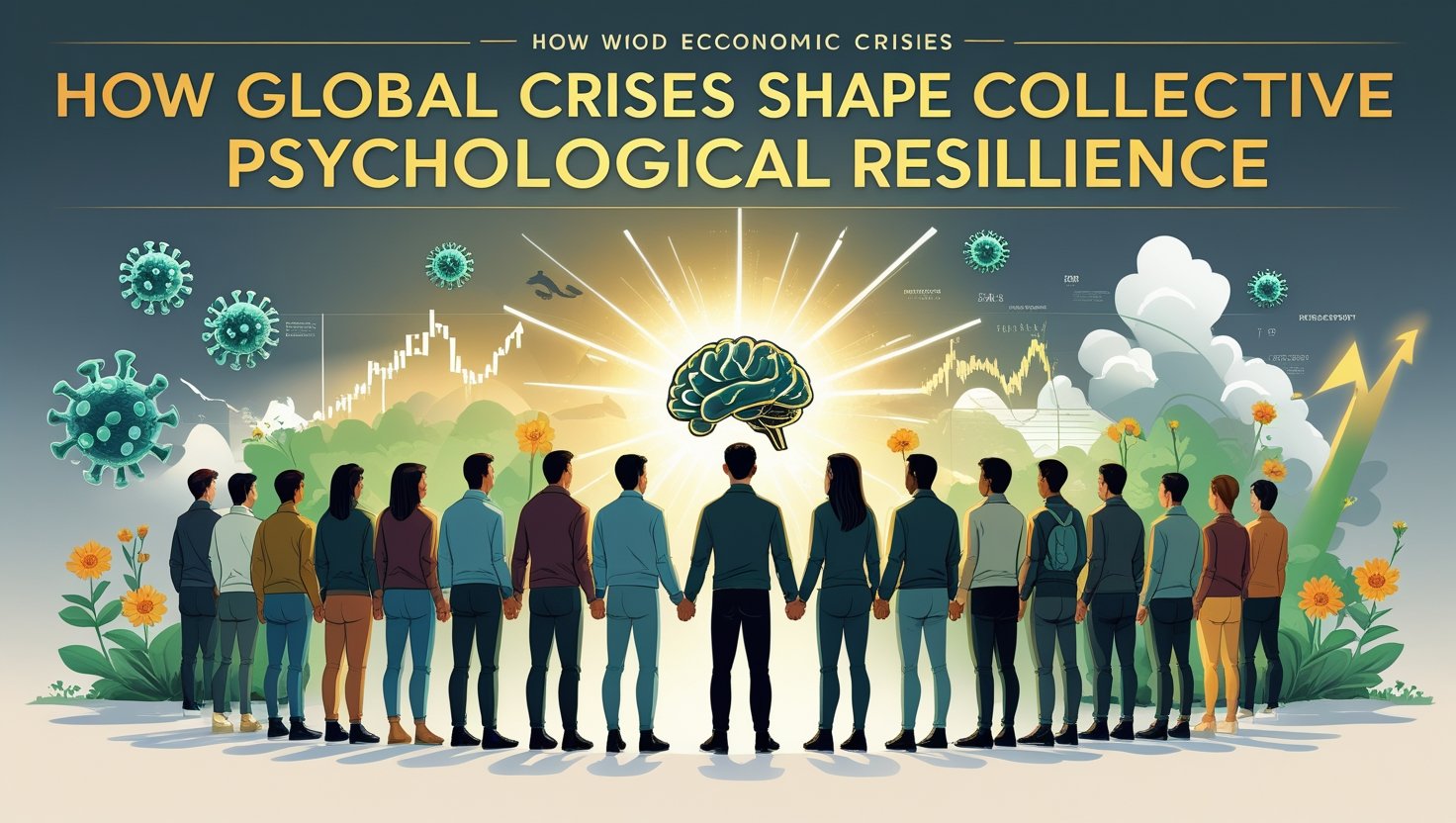
When the world faces a major trouble or crisis like war, pandemic, or climate disaster, not just individuals but entire communities and nations face psychological stress. During such times, a concept comes to the fore which we call “collective psychological resilience”. This resilience is a social and emotional ability in which people face difficulties with the support of each other and help themselves again. Compared to individual resilience, the impact of collective resilience is larger and deeper because it involves empathy, shared purpose, and community support.
When people come together to face a challenge, they not only display their courage but also give courage to others. The purpose of this introduction is to make people understand that global crises not only lead to destruction, but through them, a new spirit, unity, and emotional strength are also generated among people. It is also important to see how these problems strengthen the relationships between humans and provide them with such social bonding, which may never be there in normal circumstances. When we start understanding collective resilience, we start considering every crisis not just as a threat but also as an opportunity for learning and growth. This thinking has become an essential element of survival for every society.
Historical Perspective: Learning from Past Global Challenges:
If we take history into account, we understand that every major global crisis has left a deep impact on human society, but at the same time, it has also made people emotionally and socially stronger. World War I and II caused devastation across the world, millions of people died, cities were destroyed, but during this painful period, people supported each other, shared rations, gave shelter, and expressed emotional strength in a way that is still remembered today. Similarly, during the Great Depression, people faced job loss, hunger, and uncertainty, but community kitchens, local help groups, and neighborhood support systems not only kept people alive but also nourished their resilience. Recently, the COVID-19 pandemic has given us the greatest experience of collective trauma as people across the world faced lockdowns, health anxiety, and financial problems. But during this time, we have also seen doctors, delivery workers, and volunteers acting as heroes. All this shows that when humans are in trouble, they don’t just survive, they also evolve. We learn from history that after every crisis, a new social structure, new policies, and new emotional frameworks develop, which prepare us for the next challenges. Therefore, understanding past crises and exploring them is of fundamental importance for building future resilience.
Shared Trauma and Group Identity Formation:
When people go through great emotional or physical pain together, it is called shared trauma. This trauma affects not just the individual but entire communities. But within this pain, a process occurs that is called group identity formation. When people go through similar pain, they become emotionally connected to each other. This connection takes the form of a new relationship that gives them a common identity, a group that is connected by the same experience. During COVID-19, the whole world faced lockdown, isolation, and uncertainty. Regardless of country, culture, or religion, people had a common experience.
This shared trauma created a global group identity among survivors of the pandemic. Such identity formation increases understanding and empathy among people. When you tell someone else, “I have felt all this too,” it goes straight to the heart. This group bonding becomes the foundation of collective resilience. People form support groups, join in relief efforts, and heal for each other. This process develops not only emotional healing but also long-term social unity. As long as people are engaged in individual struggles, their healing process is slow, but when they become part of a group, they come out of the trauma more easily.
Role of Media and Communication in Resilience Building:
In today’s digital era, the role of media and communication is not just to provide information but also to shape people’s emotions, fears, and hopes. When there is a global crisis, like a war or a pandemic, people get information through news channels, social media, and messaging apps. These platforms shape people’s perception of what is serious, what is dangerous, and what is hopeful. If the media shows only negative news, it leads to anxiety, helplessness, and despair in people. But when the media maintains balance, promotes accurate and hopeful messages, it helps in building resilience. People share their personal experiences on social media platforms, and seeing supportive messages from others makes them feel that they are not alone.
This collective feeling gives a sense of support and safety. Communication tools like WhatsApp or Zoom kept people emotionally close even when they were physically distant. This improved community bonding and emotional stability. But it is also important that the media act responsibly. Fake news, exaggerated reporting, and panic-spreading headlines damage the process of resilience. Therefore, accurate information and positive storytelling are very important during times of crisis. When the media builds an emotional bridge between people, it becomes not just a means of news but a source of healing and strength that helps people collectively get through difficult times.
Mental Health Support Systems and Community Initiatives:
During global crises, not only do basic needs have to be taken care of, but mental health also becomes very important. When people are facing uncertainty, loss, and fear, they need psychological support. At such times, the role of mental health support systems and community-based initiatives becomes very important. Mental health hotlines, online counselling platforms, and free therapy sessions help people handle their emotions. When the Government and NGOs come together to make mental health services accessible, people can easily share their issues and get help. Community initiatives such as neighborhood support groups, local food banks, and volunteer programs not only provide tangible support to people but also reduce their emotional stress.
When people connect during a difficult time, their trust and confidence increase. In this environment, people become open to speaking their minds, and the healing process happens faster. If schools, colleges, and workplaces start mental wellness programs, both students and employees can become more resilient. These systems and initiatives form the foundation that helps any society rebuild itself after a crisis. When people at the community level are emotionally connected and mentally stable, they become a source of strength not just for themselves but for others as well.
Conclusion:
Global crises have always tested humans, but through each test, humans have proven their resilience. The world we live in today is full of uncertainty and challenges all the time. It is therefore important that we do not view our collective psychological resilience as a reaction but rather try to build it proactively. When people support each other, facing adversity through empathy and unity, they not only survive but thrive.
In today’s technology-driven era, we need to design media, education, and community services in a way that promotes resilience. School curriculum should include mental health education, workplaces should have stress management programs, and governments should invest in early warning and support systems. Every person needs to understand that it is part of a community and that its strength lies in connecting with others. The purpose of this conclusion is that after every crisis, we should not just build new infrastructure but also develop new thinking, new emotional strength, and new relationships. When we become emotionally strong individually and collectively, every future crisis becomes just a test that we can pass together.
FAQs:
- What is collective psychological resilience, and how is it different from individual resilience?
Collective psychological resilience refers to the ability of communities and societies to emotionally recover and adapt during crises through mutual support, empathy, and shared purpose. Unlike individual resilience, which focuses on personal coping skills, collective resilience emphasizes the strength that comes from group unity, shared experiences, and social bonding during difficult times. - How have historical global crises shaped human resilience?
Major global events like World Wars, the Great Depression, and the COVID-19 pandemic have shown that even in the face of devastation, people come together, support one another, and rebuild. From community kitchens during economic hardship to frontline workers during pandemics, history proves that humans not only endure crises but often emerge with stronger emotional connections, new social systems, and greater adaptability. - How does shared trauma lead to stronger group identity?
When people go through difficult experiences together, such as a natural disaster or pandemic, they develop a sense of shared trauma. This emotional bond forms the basis of a new group identity, where individuals feel connected through their common struggle. This connection boosts empathy, trust, and healing, making recovery faster and more meaningful at both personal and community levels. - What role does media play in building or harming resilience during global crises?
Media play a dual role. Positive and accurate reporting helps reduce fear, spread hope, and foster connection by showing acts of kindness and support. On the other hand, fake news, panic-driven headlines, and excessive negativity can increase anxiety and weaken social trust. Responsible communication is essential to building emotional stability and unity during tough times. - Why are mental health support systems and community initiatives crucial in crisis recovery?
Mental health support systems like counselling, therapy, and helplines help people manage stress, fear, and trauma during crises. Community initiatives such as volunteer groups, local food drives, and wellness programs foster emotional connection and practical support. Together, they build a foundation of trust and psychological safety that helps societies recover and become more resilient for future challenges.